Photobooth Supply Co (PBSCO) dominates the “start a photo booth business” space. They’ve built a massive brand around helping entrepreneurs buy a portable booth, book events, and build a rental company. They’re good at what they do.
But if you’re a venue owner — someone who runs a bar, restaurant, arcade, or entertainment space — PBSCO’s entire product line was designed for a completely different customer. Here’s why that matters, and how FotoATM fills the gap PBSCO never intended to.
Quick Comparison
| Feature | FotoATM (Velo / Vero / Vista) | PBSCO Salsa 2 |
|---|---|---|
| Price Range | $4,999-$7,999 | $2,999-$8,999 |
| Type | Permanent kiosk (wall-mount or standing) | Portable event booth |
| Built-in Printer | Yes (dye-sub) | Optional add-on |
| Payment Terminal | Yes (EMV tap/chip/swipe) | No |
| Fully Unattended | Yes | No (requires operator) |
| Wall-Mount Option | Yes (Velo) | No |
| AI Green Screen | Yes | Limited (via software add-ons) |
| Target User | Venue owners | Photo booth rental entrepreneurs |
| Revenue Model | Passive income for venue | Active rental business income |
Where PBSCO Shines
Photobooth Supply Co has earned its reputation. Here’s what they do well:
Best-in-class onboarding for new booth entrepreneurs. PBSCO’s training, community, and marketing support for people starting a photo booth rental business is unmatched. Their courses, templates, and community forums have helped thousands of people launch rental companies. If you want to start a photo booth rental side hustle, PBSCO is the gold standard.
Portability. The Salsa 2 is designed to be loaded into a car, set up at a wedding or corporate event, operated for a few hours, then packed up and moved to the next gig. The engineering priorities are weight, setup speed, and transport — all things that matter for mobile operators.
Broad ecosystem. PBSCO sells backdrops, props, carrying cases, and accessories. They’ve built a full ecosystem for the event rental operator who needs to show up to a venue with everything in tow.
Strong SEO and content. PBSCO’s blog and YouTube channel are packed with content about running a photo booth business. They’ve invested heavily in educating their market, and that content ranks well. If you’re researching photo booths of any kind, you’ll find PBSCO.
Where FotoATM Wins
The question isn’t whether PBSCO is good. It’s whether PBSCO is right for you — a venue owner who doesn’t want to run a photo booth rental business.
You don’t want to be an operator. PBSCO’s entire model assumes someone is running the booth at every event. Setting it up, tearing it down, troubleshooting, engaging with guests. That’s a job. FotoATM assumes nobody is there. The kiosk runs itself, collects payment, prints photos, and reports back to you through a cloud dashboard.
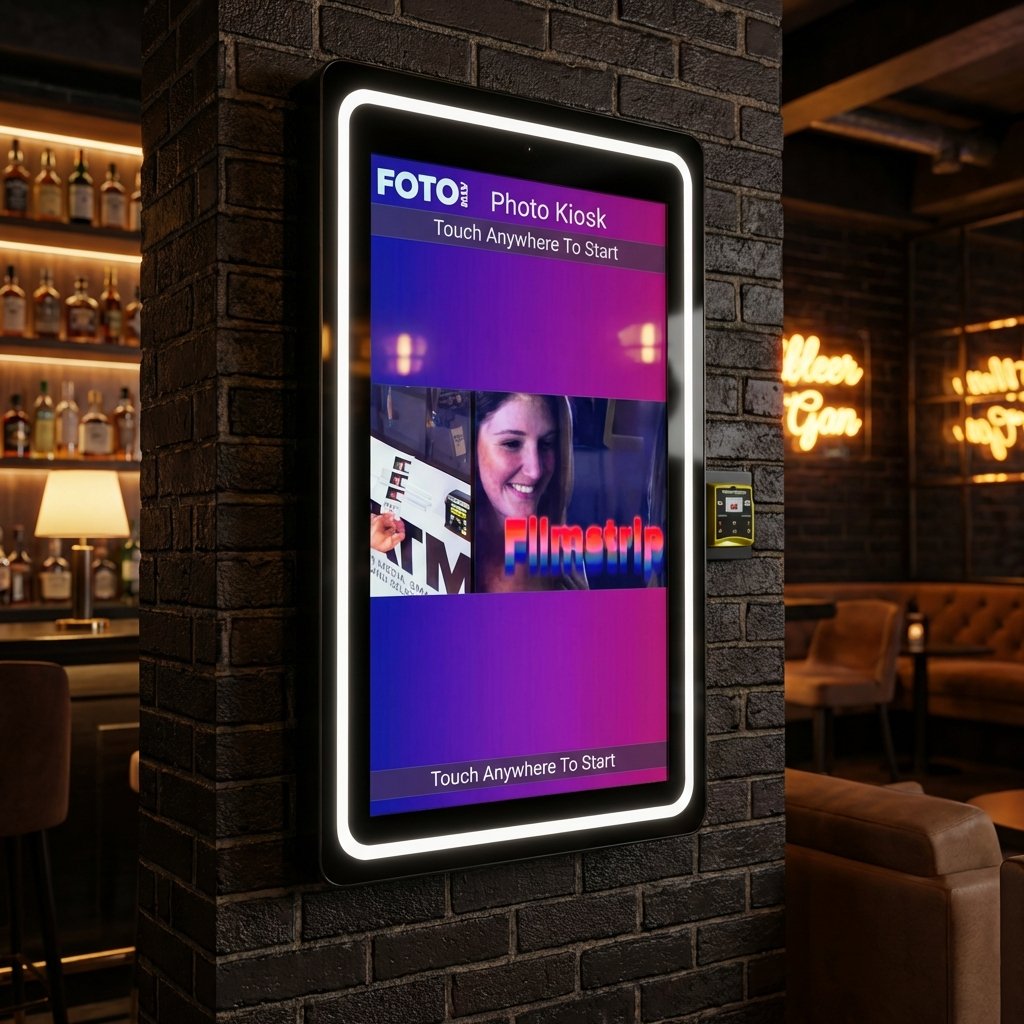
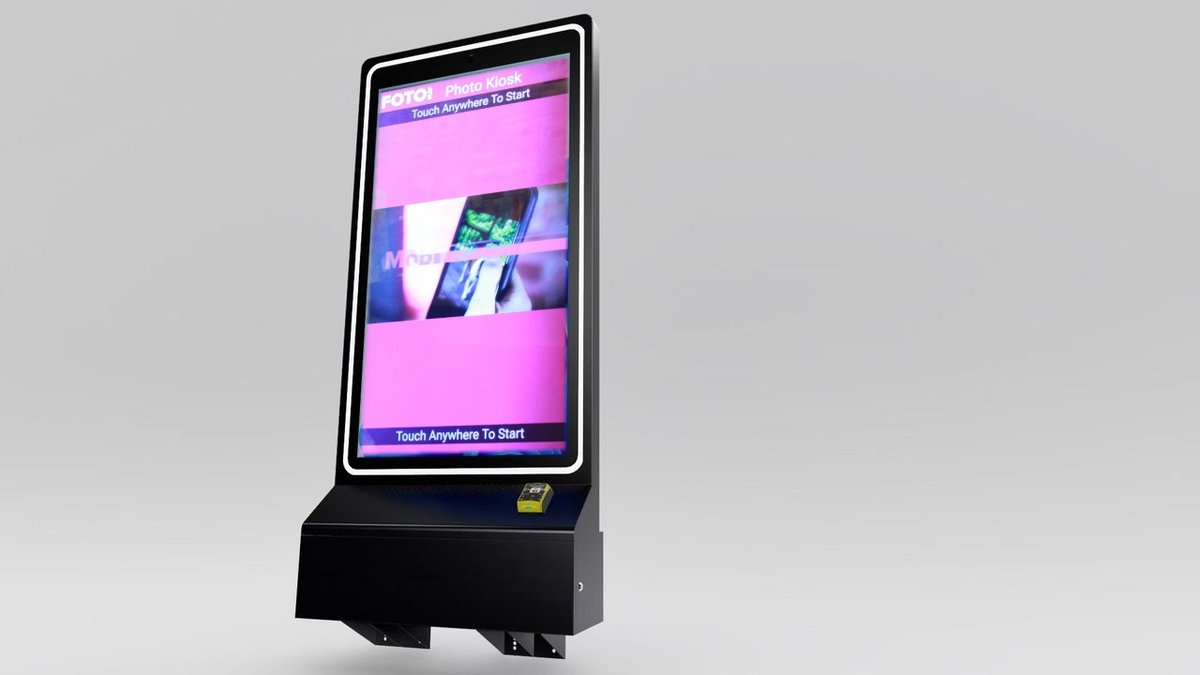
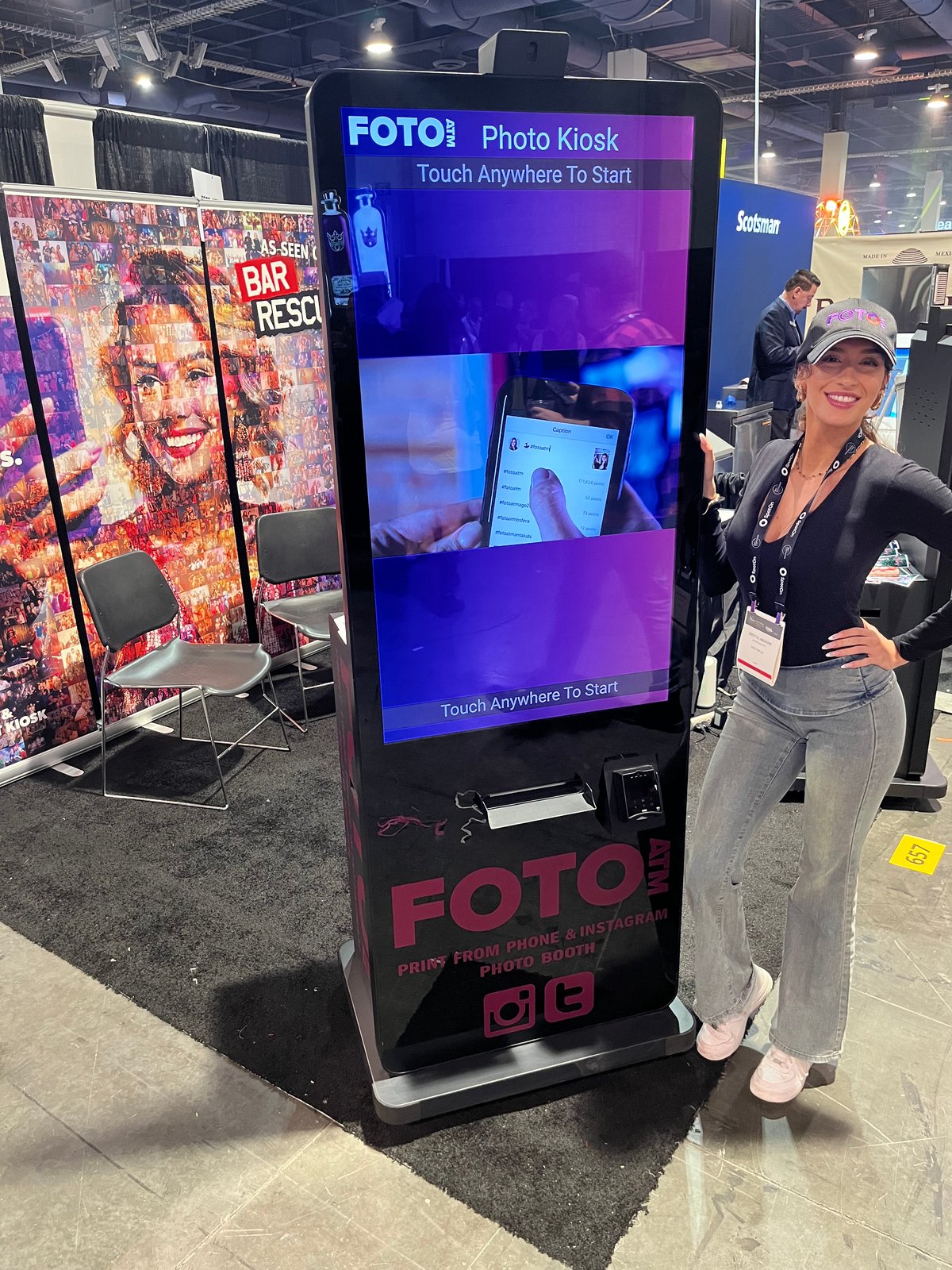
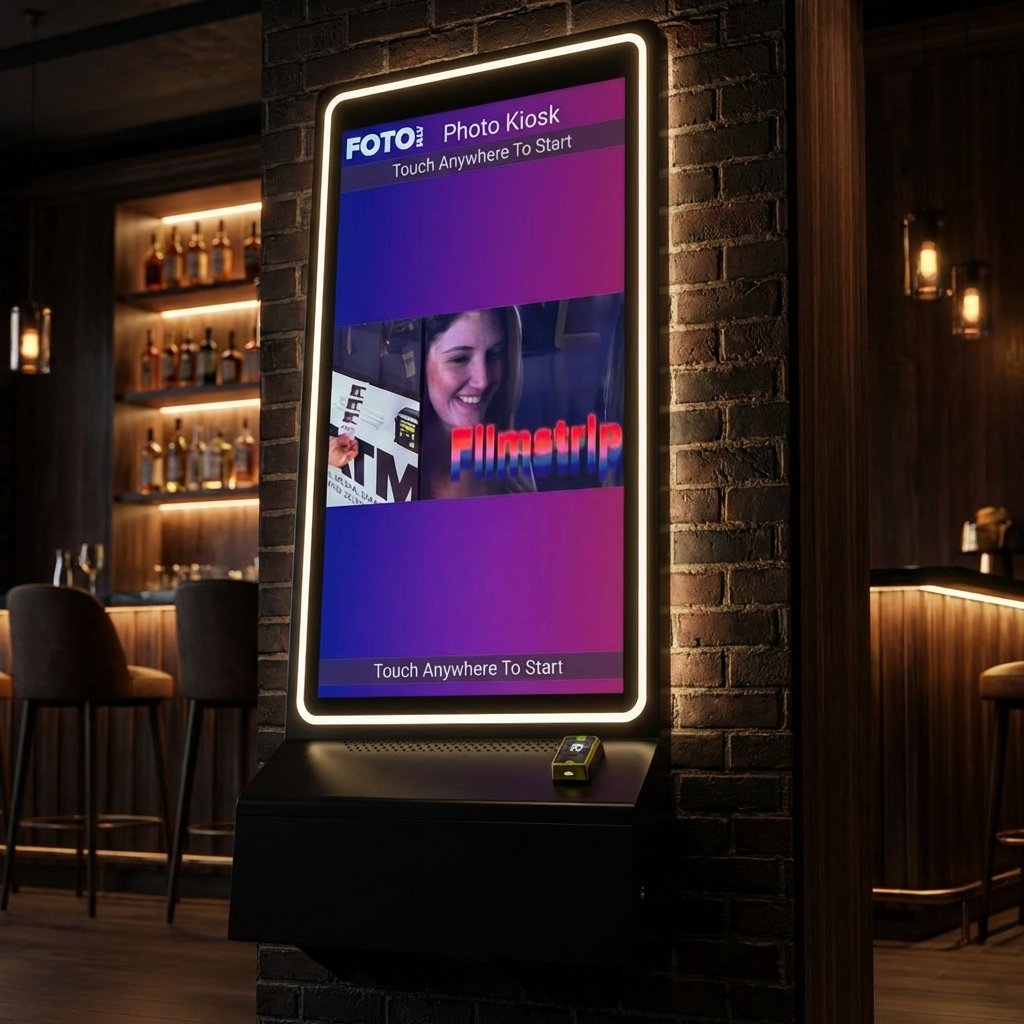
Permanent installation vs. portable setup. A Salsa 2 sitting in the corner of your bar is a portable device pretending to be furniture. FotoATM’s Velo mounts permanently to your wall like an ATM. The Vero and Vista are standing kiosks designed to occupy a permanent spot on your floor. They look like they belong because they were designed to stay.
Built-in payment processing. This is the dealbreaker for most venue owners. PBSCO booths have no integrated payment terminal. If you want guests to pay per session, you’d need to rig up a separate payment solution or have someone collecting cash. FotoATM’s EMV terminal is built into every unit — guests tap their card and go.
Revenue without the hustle. PBSCO’s revenue model requires you to book events, show up, operate, and collect payment from clients. FotoATM’s revenue model is: install the kiosk, let guests pay per session, check your dashboard. Venue owners report $500-$1,500/month depending on foot traffic.
Key Differences Breakdown
1. Two Completely Different Business Models
This is the core distinction that every other difference stems from.
PBSCO model: You buy a booth. You market your services. You book events (weddings, corporate parties, festivals). You show up, set up, operate, tear down. You invoice the client. Repeat. This is an active business that requires time, marketing, logistics, and customer service.
FotoATM model: You buy a kiosk. You install it in your venue. Guests use it and pay per session. You monitor revenue on your phone. This is passive income layered onto a business you already run.
Neither model is wrong. But if you already run a bar or restaurant and you’re working 60-hour weeks, the last thing you need is another active business to manage. FotoATM was designed for owners who want revenue, not a second job.
2. Durability and Environment
The Salsa 2 is built to be portable. That means lightweight materials, components designed for occasional use, and an iPad at its core. It’s perfect for a 4-hour wedding reception in a climate-controlled ballroom.
Now picture that same device in a bar at 1 AM on a Saturday. Spilled drinks. Bumped by dancing crowds. Running 6+ hours every night, 7 days a week. The duty cycle and environmental demands are completely different.
FotoATM kiosks use commercial-grade steel enclosures, industrial touchscreens, and components rated for continuous operation. They’re built for the same environments as arcade cabinets and payment terminals — because that’s essentially what they are.
3. Software and Management
PBSCO’s software is event-oriented. You configure a session for a specific event, customize overlays for that client, and run it for a set duration. It’s great for the rental operator who needs quick customization per gig.
FotoATM’s cloud dashboard is operations-oriented. You monitor uptime, track daily/weekly/monthly revenue, manage printer supplies remotely, update green screen backgrounds, and receive alerts if anything needs attention. It’s built for “set it and forget it” management across one or multiple locations.
4. The Wall-Mount Factor
If you want a photo booth that mounts to your wall and takes up zero floor space, PBSCO doesn’t offer that. Their products are floor-standing portable units.
FotoATM’s Velo line was designed specifically as a wall-mounted kiosk. The 27” Velo fits almost anywhere — next to the bar, in a hallway, near the restrooms. The 49” Velo makes a statement in larger venues. No floor space sacrificed, no trip hazards, no moving parts.
5. Pricing Reality Check
PBSCO’s Salsa 2 starts at $2,999, but a fully equipped unit with printer, accessories, and software runs $6,000-$9,000. And there’s still no payment terminal.
FotoATM’s Velo starts at $4,999 complete — screen, printer, payment terminal, AI green screen, cloud dashboard, everything. The Vero (compact standing) is $5,999 and the Vista (full-size) is $7,999. No hidden costs, no essential accessories sold separately.
Who Should Choose What
Choose PBSCO if:
- You want to start a photo booth rental business
- You plan to book events and operate the booth yourself (or hire operators)
- Portability is critical — you need to transport it between venues
- You’re building a side hustle or full-time event business
- You value PBSCO’s training community and business resources
Choose FotoATM if:
- You own a venue and want it to generate passive income
- You need fully unattended operation with no staff required
- You want integrated payment processing from day one
- You need commercial-grade durability for a bar/restaurant environment
- You prefer a permanent installation (wall-mount or standing)
The Bottom Line
Photobooth Supply Co built the best product for aspiring photo booth rental entrepreneurs. FotoATM built the best product for venue owners who want passive revenue without the operational overhead.
If you’re reading this as a bar owner, restaurant manager, or entertainment venue operator thinking “I don’t want to start a photo booth business, I just want a kiosk that makes money in my space” — that’s exactly what FotoATM was built for.
Find the right FotoATM kiosk for your venue:
- Take the 2-minute quiz to get a personalized recommendation
- Compare FotoATM models side by side
- Contact our team to discuss your space