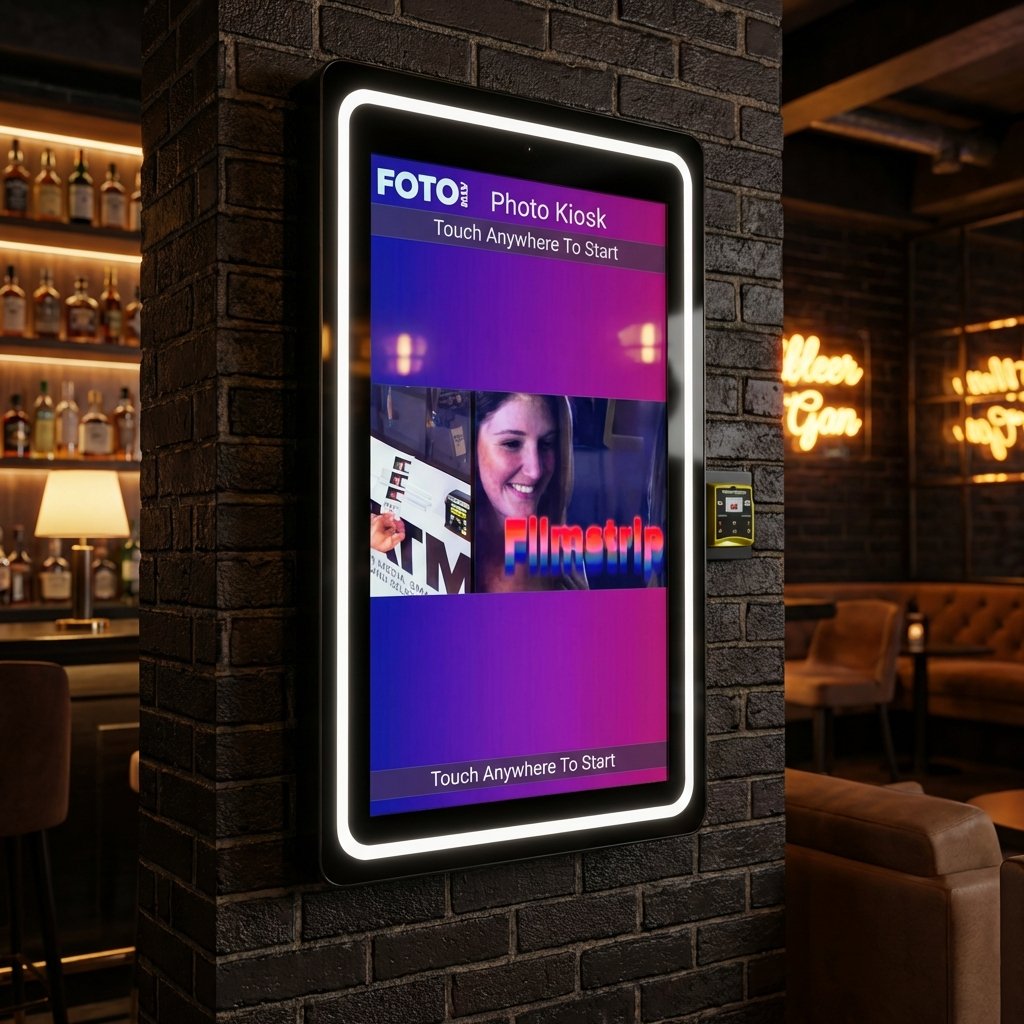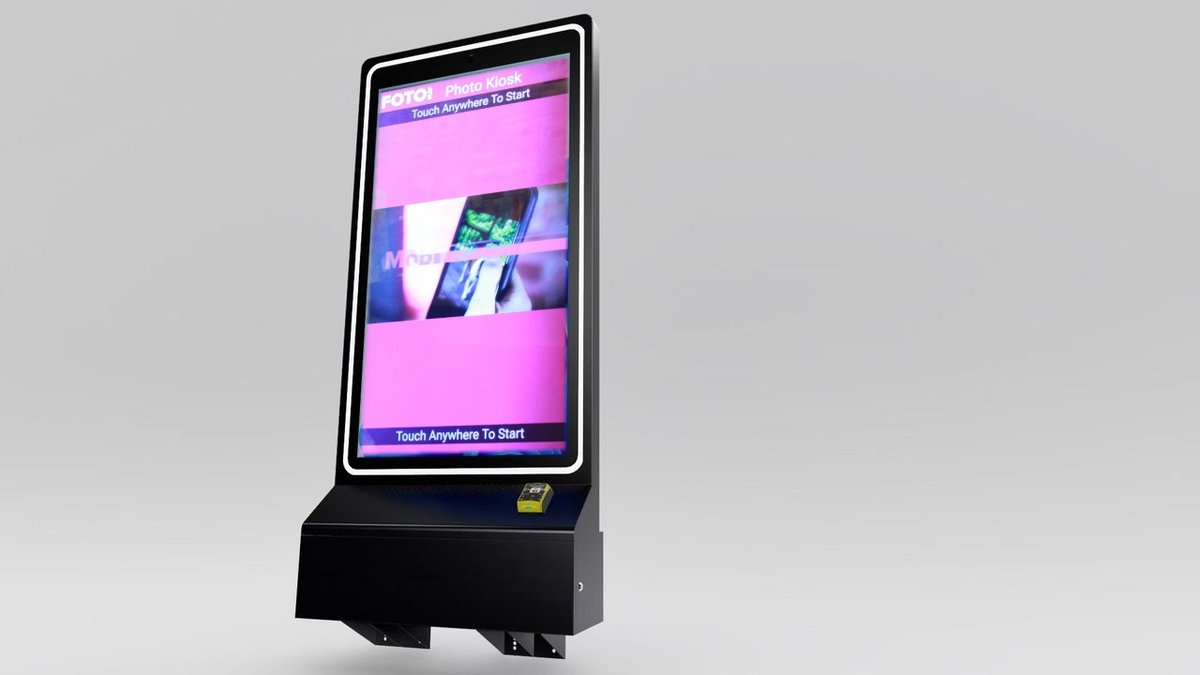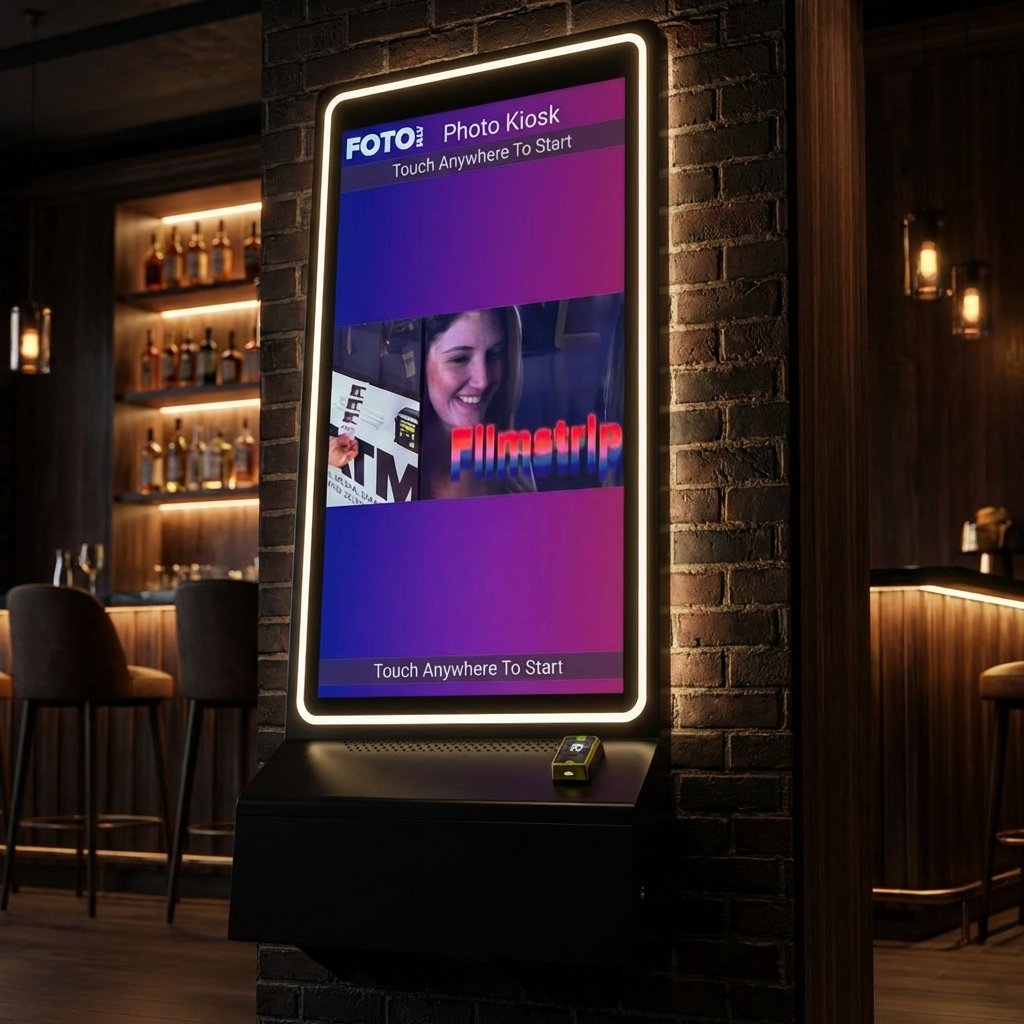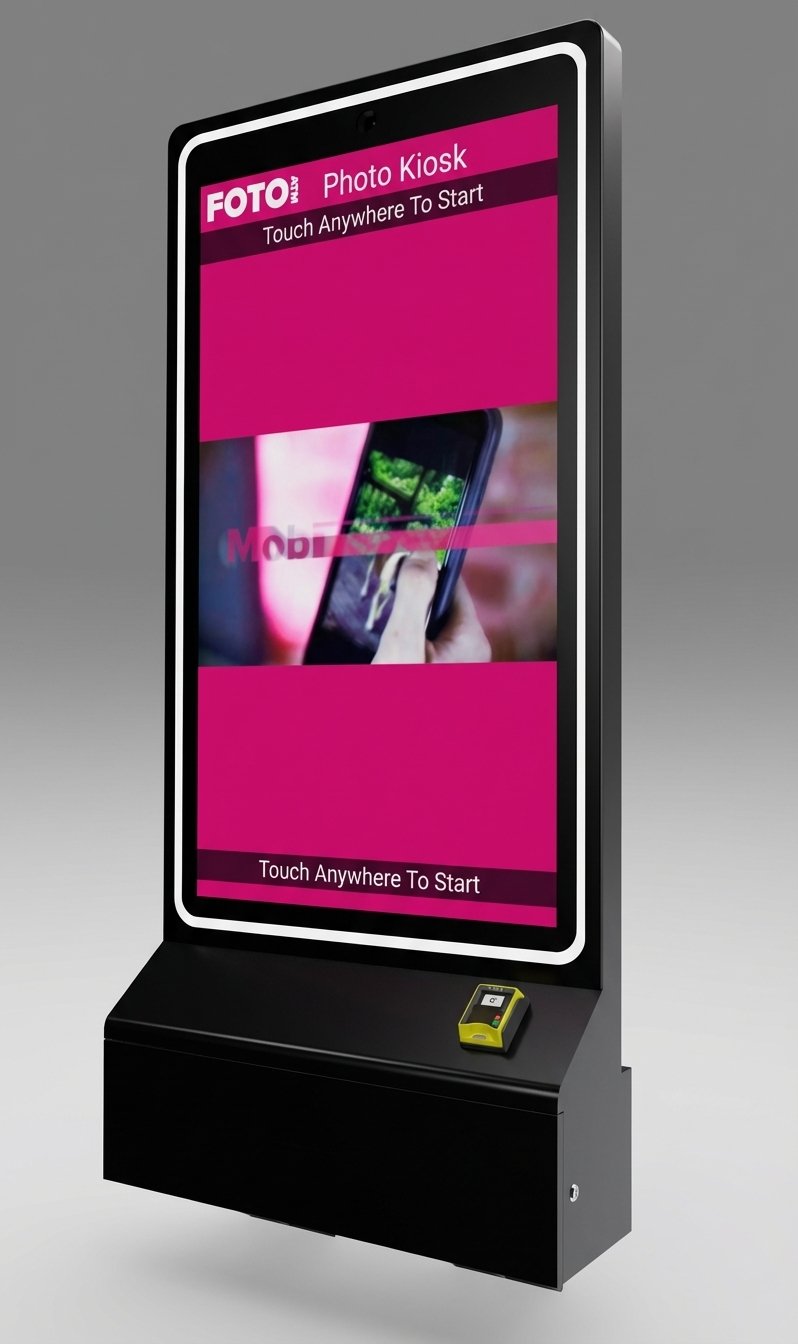
AI-powered photo kiosks are changing how we take and secure photos in public spaces. These kiosks use artificial intelligence to improve photo quality and ensure data safety by integrating features like biometric verification and two-factor authentication (2FA). Here’s a quick breakdown:
-
AI Features: Adjust lighting, remove backgrounds, and detect tampering in real time.
-
Security Risks: Handle sensitive data like personal images, payment details, and biometrics.
-
2FA Methods: Include facial recognition, fingerprint scanning, one-time passwords (OTPs), and physical tokens for added security.
-
Benefits: Stronger fraud prevention, better user experience, and compliance with data protection laws.
-
Challenges: Privacy concerns, technical complexity, and high initial costs.
Foto ATM, a leading provider, combines AI and 2FA to offer secure and customizable kiosks for various venues, ensuring user data remains protected while maintaining ease of use.
Secure Self-Service Kiosks: FaceLock™ Protects User Privacy
How AI Improves Security and Authentication in Photo Kiosks
AI takes photo kiosk security to the next level by replacing static controls with dynamic, real-time threat detection. By learning from ongoing user interactions, AI not only strengthens security but also enhances overall kiosk functionality. This advanced security approach focuses on two key areas: biometric verification and real-time threat detection.
AI-Driven Biometric Verification
AI enhances biometric authentication by combining multiple methods for added security. Facial recognition ensures the user is present and genuine, while fingerprint analysis provides an extra layer of verification. Together, these technologies create a more secure and harder-to-bypass system.
Real-Time Threat Detection
AI’s ability to identify threats as they happen is a game-changer. Instead of waiting to react, these systems continuously monitor video feeds, access logs, and sensor data to spot potential risks. By comparing behavior against established patterns, AI can detect unusual activity that might indicate tampering or malicious intent.
To minimize false alarms and improve response times, AI correlates data from multiple sources, providing contextual alerts that include video clips and access logs. This ensures security teams have the information they need to act quickly and accurately.
Compliance and Privacy Protection
AI-powered systems also help photo kiosks stay compliant with data protection laws while safeguarding user privacy. Machine learning algorithms automatically sort and manage personal data – like biometric details and payment information – according to regulatory standards. This ensures sensitive data is handled appropriately, reducing the risk of non-compliance and maintaining operational efficiency. By automating these processes, kiosks can focus on delivering a seamless user experience while staying within legal boundaries.
Two-Factor Authentication Methods for Photo Kiosks
Photo kiosks are stepping up their security game by integrating two-factor authentication (2FA) methods, bolstered by AI. These kiosks utilize a mix of biometric verification, one-time passwords (OTPs), and physical tokens to safeguard user data and ensure seamless operation. With AI in the mix, these methods strike a balance between robust security and ease of use.
Biometric Factors
Facial recognition is one of the most user-friendly biometric methods for photo kiosks. Users simply face the camera, and AI algorithms verify their identity in seconds. This is especially effective since kiosks already come equipped with high-quality cameras. To strengthen security, AI-powered liveness detection ensures that attempts to spoof the system using photos or videos are blocked.
Fingerprint scanning offers another layer of biometric security, though it requires additional hardware. AI enhances these systems by adapting to variations like finger placement, skin conditions, or minor injuries. Over time, they also improve accuracy for frequent users by learning from repeated interactions.
By combining both methods, photo kiosks achieve even greater security. AI can dynamically switch between facial recognition and fingerprint scanning based on the situation – using facial recognition in well-lit areas, for instance, or fingerprint scanning when lighting conditions are poor or users are wearing masks.
One-Time Passwords (OTPs)
For users who prefer alternatives to biometrics, OTPs provide a reliable solution. These temporary codes can be delivered via text, email, or authenticator apps.
-
SMS-based OTPs are widely used since almost every smartphone supports SMS. Users simply enter their phone number, receive a code, and input it for authentication.
-
Email OTPs operate similarly but offer better integration with business systems, making them a preferred option in certain scenarios.
-
App-based OTPs – via tools like Google Authenticator or Microsoft Authenticator – offer the highest level of security. These apps generate time-sensitive codes that refresh every 30 seconds, adding an extra layer of protection.
AI enhances OTP systems by identifying unusual patterns and adapting delivery methods. For example, if an email-based OTP fails, the system might automatically switch to SMS. It can also extend code entry windows when needed, maintaining security while accommodating user needs.
Physical Tokens or Smart Cards
Physical tokens and smart cards cater to environments where the highest level of security is required.
-
Smart cards: Employees can use their existing ID cards to authenticate by tapping them on a kiosk reader. AI tracks usage patterns, flagging unusual activity like cards being used outside normal hours or in unexpected locations.
-
USB security keys: Devices like YubiKeys provide robust protection against phishing and other attacks. Users authenticate by tapping the USB key, while AI monitors for anomalies, such as the same key being used in multiple places at once.
-
NFC tokens: These offer a contactless option, using either smartphone apps or dedicated hardware. Users tap their NFC-enabled device for quick access. AI adds an extra layer of security by analyzing the unique radio frequency signatures of each token, making cloning attempts virtually impossible.
The best results come from combining multiple methods. AI can intelligently choose the most suitable authentication type based on factors like user preferences, location, and security needs. This adaptable approach ensures kiosks remain secure while delivering a smooth and efficient experience for users in any setting.
sbb-itb-3201140
Benefits and Challenges of AI-Powered 2FA in Photo Kiosks
AI-driven two-factor authentication (2FA) in photo kiosks offers a mix of advantages and hurdles. Understanding this balance is critical for businesses looking to enhance security while maintaining usability.
Benefits of AI-Powered 2FA
One of the standout benefits is stronger fraud prevention. AI systems excel at spotting suspicious activity that might go unnoticed by human operators. For instance, they can detect patterns like repeated failed login attempts from the same location or unusual access times. By analyzing user behavior in real-time, these systems can flag potential threats before they escalate.
Another key advantage is an improved user experience. AI adapts to users over time, learning from successful authentications to make future logins quicker and more reliable. For example, if a fingerprint scan fails, the system can seamlessly switch to facial recognition, ensuring smoother access.
Lower operational costs are also a significant benefit. Since AI automates most of the threat detection process, there’s less need for manual monitoring. This allows staff to focus on customer service, which is especially helpful in busy environments like restaurants or bars where employees are already juggling multiple tasks.
AI-powered 2FA also makes compliance easier to manage. Automated logging and reporting help businesses meet data protection regulations without adding administrative overhead. These systems can also support accessibility standards by offering multiple verification options, ensuring inclusivity.
Lastly, scalability is a major plus. Cloud-based AI allows businesses to deploy consistent security protocols across multiple locations with centralized oversight and continuous system updates.
Challenges and Limitations
Despite its benefits, AI-powered 2FA comes with its share of challenges.
Privacy concerns are a major issue. Users may hesitate to share biometric data, especially in informal settings like bars or entertainment venues. Some people might outright refuse to use facial recognition or fingerprint scanning, forcing businesses to provide alternative methods that may not be as secure.
For smaller businesses, technical complexity can be a barrier. Implementing and maintaining AI-driven systems often requires expertise that many operators don’t have. Tasks like system updates, troubleshooting, and integrating with existing payment systems can become ongoing headaches.
High upfront costs can also deter smaller businesses. Beyond upgrading kiosks, there’s the expense of staff training and integrating the new system with existing infrastructure, which may strain budgets despite potential long-term savings.
Another challenge is false positives, which can frustrate users. Overly cautious AI systems might flag legitimate users, leading to repeated authentication requests or even lockouts. This can be especially problematic during peak times when quick access is crucial.
Internet dependency is another limitation. Many AI-powered systems rely on cloud processing for complex tasks, making them vulnerable to connectivity issues. Poor internet speeds or outages can slow down or disable authentication, leaving legitimate users locked out.
Finally, accessibility concerns need to be addressed. Biometric systems don’t always accommodate everyone. People with disabilities, injuries, or certain medical conditions may struggle with fingerprint or facial recognition. Offering alternative methods that are equally secure and user-friendly requires thoughtful planning.
Comparison Table: Benefits vs. Challenges
Here’s a quick look at how the benefits stack up against the challenges:
| Aspect | Benefits | Challenges |
| Security | Real-time threat detection, fraud prevention, behavioral analysis | False positives, system vulnerabilities, dependency on internet connectivity |
| User Experience | Faster authentication, personalized interactions, multiple options | Privacy concerns, potential lockouts, accessibility issues |
| Operations | Reduced monitoring costs, automated reporting, scalable deployment | Technical complexity, staff training requirements, maintenance needs |
| Financial Impact | Long-term cost savings, reduced fraud losses, improved efficiency | High initial investment, ongoing subscription costs, integration expenses |
| Compliance | Automated logging, standardized protocols, audit trail generation | Privacy regulation complexity, data storage requirements, consent management |
To make AI-powered 2FA work effectively, businesses need to strike a balance between security and user expectations. A phased approach – starting with basic features and gradually scaling up – often proves more manageable than diving into a full-scale implementation. By carefully assessing their needs and capabilities, businesses can leverage AI-powered 2FA to enhance security without compromising usability in photo kiosks.
AI-Powered Photo Kiosks in Practice: Foto ATM’s Approach
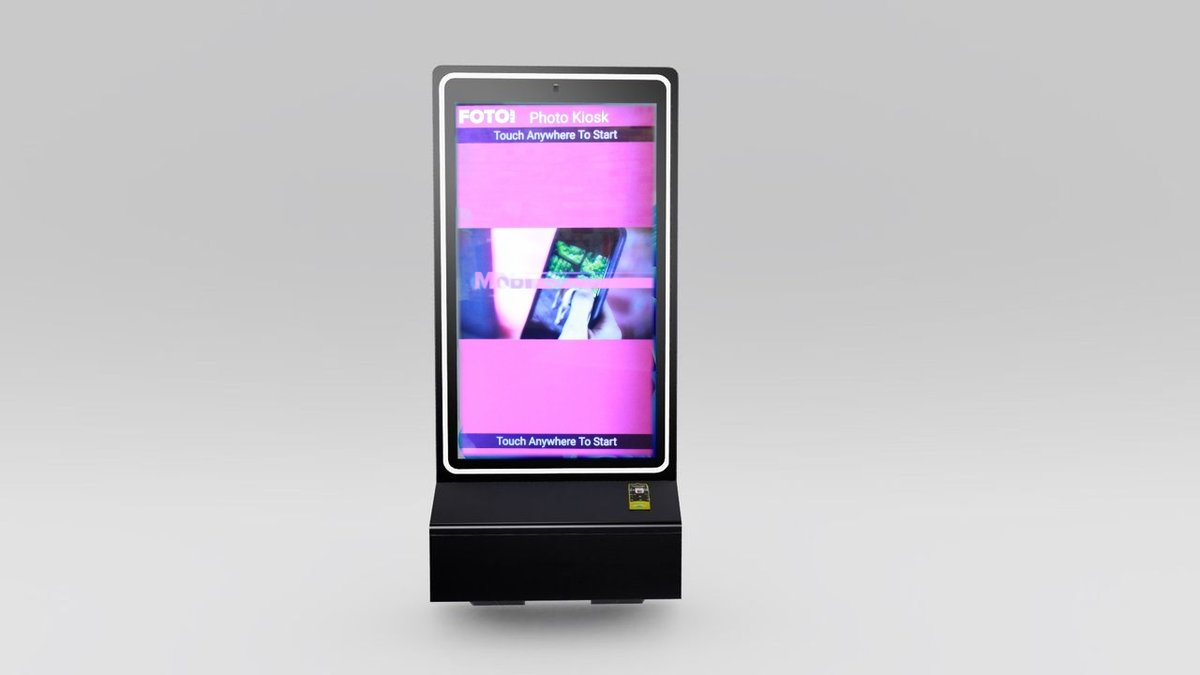
Foto ATM offers AI-powered photo kiosks that blend cutting-edge security with an easy-to-use design, making two-factor authentication more accessible for businesses across the U.S. Their approach tackles the challenges of securing unattended photo kiosks while keeping operations straightforward and efficient.
Foto ATM’s Security Features
Foto ATM leverages AI in both its kiosk hardware and cloud-based software to deliver real-time security and two-factor authentication. The kiosks feature built-in cameras that use AI to detect tampering attempts, ensuring the hardware remains secure. On the software side, a cloud-based system monitors threats in real time across all deployed kiosks. This includes integration with EMV card readers for secure transaction processing, which flags any unusual activity.
Additionally, real-time analytics provide venue operators with detailed insights into access patterns and authentication attempts. These reports help businesses make informed decisions about any extra security measures they might need to implement.
Customizable and Cloud-Managed Solutions
Foto ATM’s cloud-based platform allows businesses to tailor security settings to fit their specific needs. For instance, a family entertainment venue might set up protocols that are more accommodating for children, while a bar may require stricter authentication measures. The software also supports white-label customization, enabling businesses to maintain their branding with personalized security messages and privacy notices.
Remote management tools make it easy to monitor and adjust settings in real time, ensuring seamless updates across all kiosks. These features allow businesses to implement precise, context-specific security measures that reinforce two-factor authentication, adapting to a variety of operational needs.
Applications Across Different US Venues
Foto ATM’s AI-driven security features prove especially useful in high-traffic environments like bars and restaurants, where traditional security measures often fall short. Event venues, such as weddings, benefit from customizable access controls that protect guest privacy and streamline photo distribution. Retail stores, meanwhile, use these features to safeguard customer data during photo transactions.
The system’s ability to integrate with existing payment systems ensures smooth and secure user authentication across various settings. With volume pricing discounts of up to 30%, deploying these kiosks across multiple locations becomes an affordable option for businesses looking to enhance their security infrastructure.
Conclusion
The blend of AI and two-factor authentication (2FA) is reshaping security in photo kiosks, offering a smarter, safer way to manage unattended digital interactions. As self-service technology becomes more common across the United States, these kiosks are stepping up their game with features like biometric verification, real-time threat detection, and intelligent monitoring. Together, these tools create a strong security framework that safeguards both customer data and business operations.
AI-powered kiosks strike a balance between security and ease of use by layering multiple technologies such as facial recognition, fingerprint scanning, one-time passwords (OTPs), and smart cards. These features can be tailored to fit the specific needs of different venues, making them especially useful in busy locations or settings where privacy is a priority. Plus, the ability to manage multiple kiosks remotely while maintaining consistent security standards is a game-changer for businesses operating in diverse markets.
Privacy and compliance are at the heart of these advancements. With data protection laws constantly evolving, AI-driven systems that can adapt to new regulations and maintain audit trails are becoming essential. Add secure payment options into the mix, and you have a comprehensive system designed to meet modern security demands while ensuring customer trust.
Looking ahead, the success of AI and 2FA in photo kiosks will depend on their ability to keep improving while maintaining a seamless user experience. Foto ATM’s scalable cloud platform, with features like volume pricing and white-label options, shows how advanced security can be both effective and accessible. This approach ensures security doesn’t become a hurdle but instead serves as a competitive edge, building trust and boosting operational efficiency.
The future of photo kiosk security lies in systems that are always learning, adapting, and protecting – quietly working in the background while users focus on capturing their special moments.
FAQs
How does AI improve the security of photo kiosks?
AI strengthens the security of photo kiosks by integrating biometric verification systems like facial recognition. This technology verifies the identity of users, ensuring that only authorized individuals can access and operate the kiosk.
On top of that, AI employs real-time threat detection to keep an eye on user behavior and surrounding activities. For instance, it can pick up on unusual gestures or actions that might signal tampering or attempted theft. By addressing potential risks as they arise, AI delivers a more responsive and adaptive security approach compared to traditional, static methods.
How is biometric data used in AI-powered photo kiosks, and what steps are taken to protect user privacy?
Biometric data plays a key role in AI-powered photo kiosks, enabling features like facial recognition and identity verification. These capabilities enhance both security and personalization, making the user experience more seamless. However, the use of such sensitive information brings up serious privacy concerns. Unlike a password, biometric details – such as a face or fingerprint – cannot be altered if they are ever compromised.
To tackle these challenges, companies adopt a range of protective measures, including data encryption, strict access controls, and anonymization techniques. These safeguards are designed to shield biometric data from misuse, minimize risks, and ensure compliance with privacy laws. By prioritizing these protections, users can take advantage of AI-powered kiosks with a greater sense of trust and security.
What challenges do businesses face when using AI-powered 2FA in photo kiosks, and how can they address them?
Businesses often face hurdles like data privacy concerns, technical integration challenges, and user resistance when rolling out AI-based two-factor authentication (2FA) in photo kiosks. Employees or customers might find the technology unfamiliar, and connecting AI systems with existing infrastructure can sometimes feel like navigating a maze.
To overcome these obstacles, companies should focus on a few key strategies: educating users about the added security benefits, ensuring strong data protection protocols, and selecting solutions that easily align with their current systems. These efforts can pave the way for smoother adoption and build greater confidence in the technology.
Ready to add passive revenue to your venue? Take the 60-second kiosk quiz to find your perfect match, or compare all models side by side.